Ryan Easley Tiger Video and Oklahoma Attack
The world of exotic animal care is one filled with passion, spectacle, and at times, tragedy. Over the weekend, this dangerous balance was once again brought to the forefront when Ryan Easley, a 37-year-old tiger handler with ties to the infamous Netflix series Tiger King, was killed by one of the very animals he had devoted his life to protecting. The incident occurred at Growler Pines Tiger Preserve, a family-run facility in Hugo, Oklahoma, during what was supposed to be a routine performance.
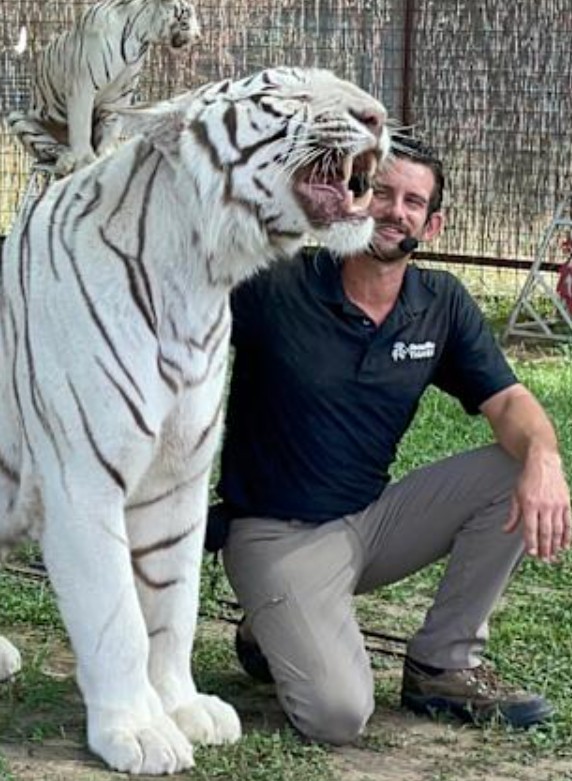
The sudden death of Easley shocked animal enthusiasts, conservationists, and the broader public, reigniting debates over whether wild animals like tigers should ever be used in performances. Easley’s connection to Joe Exotic and Doc Antle both central figures in Tiger King has only heightened interest in the tragedy, linking it to a wider narrative about the risks and controversies of big cat captivity in America.
The Incident and Video
The fatal attack unfolded on Saturday as Easley was nearing the end of a show at Growler Pines Tiger Preserve. According to Choctaw County Sheriff Terry Park, the tiger involved was one that Easley had raised since it was a cub. Despite this close bond, the animal suddenly turned on him during the performance, stunning onlookers and staff alike.
Video of the tragic incident of Ryan Easley being attacked by a tiger leading to his death
Deputies responded quickly after reports of the attack but found Easley unresponsive. Local news affiliate KXII reported that he was not breathing by the time authorities arrived. Efforts to revive him were unsuccessful, and he was pronounced dead at the scene.
In a statement released on Facebook, Growler Pines confirmed Easley’s passing: “Ryan Easley lost his life in an accident involving a tiger under his care. This tragedy is a painful reminder of both the beauty and unpredictability of the natural world. Ryan understood those risks not out of recklessness but out of love.”
Background on Ryan Easley
Easley’s life was inseparable from his love of animals, especially big cats. At just 37, he had already built a career around tiger handling and wildlife advocacy. Known as the founder of ShowMe Tigers, a traveling big cat performance act, Easley gradually shifted away from spectacle and toward conservation and education.
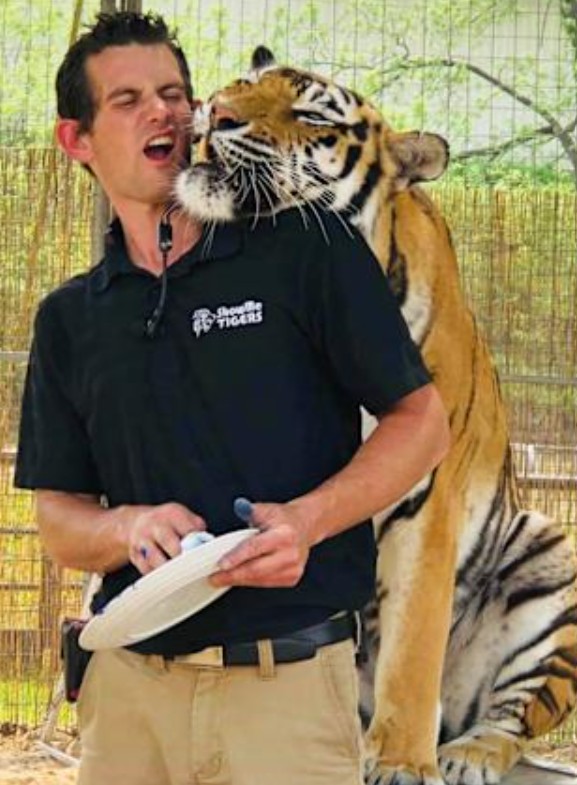
Friends and colleagues described him as a “passionate advocate for wildlife conservation.” His life’s mission was not merely about entertainment but also about creating a deeper understanding of these powerful creatures. Easley was well aware of the inherent dangers, but his devotion to the animals outweighed his fears. For him, the risk was a natural part of working closely with tigers animals he respected and cared for deeply.
Growler Pines Tiger Preserve
The Growler Pines Tiger Preserve, where Easley lost his life, was more than just a zoo. Originally established as the permanent home for ShowMe Tigers, the facility represented Easley’s transition from traveling performances to a conservation-based approach.
The preserve, located in Hugo, Oklahoma, was envisioned as a place where visitors could learn about retired circus animals and better understand the plight of big cats in captivity. According to its website, Growler Pines’ mission emphasized education and conservation while providing sanctuary to animals that could not be released into the wild.
For Easley, Growler Pines was both a dream realized and a platform to continue advocating for big cats. Tragically, it also became the site of his untimely death.
Connection to Joe Exotic and “Tiger King”
What makes Easley’s story resonate beyond the local tragedy is his connection to Joe Exotic, the flamboyant Oklahoma zoo owner who became internationally known through Netflix’s Tiger King. Easley had acquired some of his tigers from Joe Exotic, whose real name is Joseph Maldonado, and from Bhagavan “Doc” Antle, another figure prominently featured in the series.
According to PETA, Easley’s tigers would even board at Joe Exotic’s zoo during the winter months when they were not on tour. This link ties Easley to the larger narrative of America’s fascination with exotic animals and the controversial individuals who profit from them.
Following Easley’s death, Joe Exotic, currently serving a prison sentence, posted condolences on social media. “Prayers go out to his family,” he reportedly wrote, adding that Easley loved his tigers and had been an advocate for their welfare. The posts were later deleted, but not before being reported by local outlets like The Oklahoman.
Reactions to the Tragedy
The news of Easley’s death sparked an outpouring of responses from both supporters and critics of big cat captivity. Growler Pines itself framed the tragedy as both heartbreaking and inevitable when working with such unpredictable creatures.
Animal rights groups, however, took a different stance. Humane World for Animals, formerly known as the Humane Society of the United States, issued a strong statement condemning the continued use of wild animals in performances. One of its investigators had previously gone undercover with ShowMe Tigers, observing what they described as forced performances. “Ryan Easley’s death was a sad and preventable tragedy,” the group said, calling for an end to the practice altogether.
PETA also weighed in, linking Easley’s death to his association with Joe Exotic and Doc Antle. The organization emphasized that tragedies like this are inevitable when people attempt to tame wild predators for entertainment or display.
These differing reactions highlight the central tension in Easley’s legacy: while many admired his devotion, others viewed his work as part of a problematic industry that puts both animals and humans at risk.
History of Big Cat Attacks in Captivity
Easley’s death is part of a troubling pattern of fatal big cat incidents in captivity. Over the past two decades, there have been numerous high-profile cases underscoring the dangers of keeping large predators in controlled environments.
Palm Beach Zoo, 2016: A keeper was killed by a tiger during a routine training session.
California Animal Sanctuary, 2013: A lion fatally attacked a worker inside its enclosure.
San Francisco Zoo, 2007: An escaped Siberian tiger mauled three visitors, killing one and injuring two others.
Each case fueled debates similar to the one now surrounding Easley’s death: whether such facilities can ever truly ensure safety for both humans and animals.
Legacy of Ryan Easley
Despite the controversy, Easley is remembered by those close to him as a man who loved and respected the animals he worked with. His life’s work revolved around tigers, and his dedication was evident in every aspect of his career.
Supporters point to his efforts to transition from entertainment toward conservation as proof of his evolving philosophy. While critics argue that his death illustrates the risks of captivity, admirers insist that Easley was more than a showman he was a caretaker, educator, and advocate.
His passing leaves a void at Growler Pines and in the broader community of big cat caretakers. It also leaves behind a complex legacy: one that embodies both the beauty of human-animal bonds and the dangers of overstepping nature’s boundaries.
The tragic death of Ryan Easley serves as a stark reminder of the unpredictable nature of wild animals, no matter how familiar they may seem to their handlers. Easley’s life was defined by his devotion to big cats, but his death underscores the inherent risks of working so closely with predators that remain governed by instinct.
At the same time, the incident sparks broader questions: Should big cats continue to be part of performances, even in facilities that emphasize conservation? Can sanctuaries strike a balance between public education and safety? And ultimately, how should society honor the memory of individuals like Easley, whose passion was genuine but whose work existed in a controversial space?
As the debates continue, one truth remains clear: Ryan Easley’s love for his animals was undeniable. His death is both a personal tragedy and a moment of reckoning for an industry that continues to walk the fine line between awe-inspiring and perilous.
World News -Jimmy Kimmel Charlie Kirk Comments Video on Assassination
Edwin Cruz Gomez Video and Death of Jhoanny Gomez-Alvarez
Tyler Robinson Video and Conservative Activist Charlie Kirk
Yordanis Cobos-Martinez Video Kill Chandra Nagamallaiah in Dallas Motel Beheading
Charlie Kirk Shooting Video on X (Twitter) and Close Up Full
Iryna Zarutska Video and Tragedy in Charlotte
Lisbon Funicular Crash Video and Funicular Derailment