Gaddafi Death and The Final Hours of Libya’s Fallen Dictator
On October 20, 2011, Muammar Gaddafi, the man who had ruled Libya with an iron fist for 42 years, met a violent and humiliating end in a concrete culvert in his hometown of Sirte. His final moments were captured not in official footage but in shaky, bloody mobile phone videos shot by jubilant rebels, marking a dramatic turning point in the Arab Spring and ending one of the most brutal regimes in North African history.
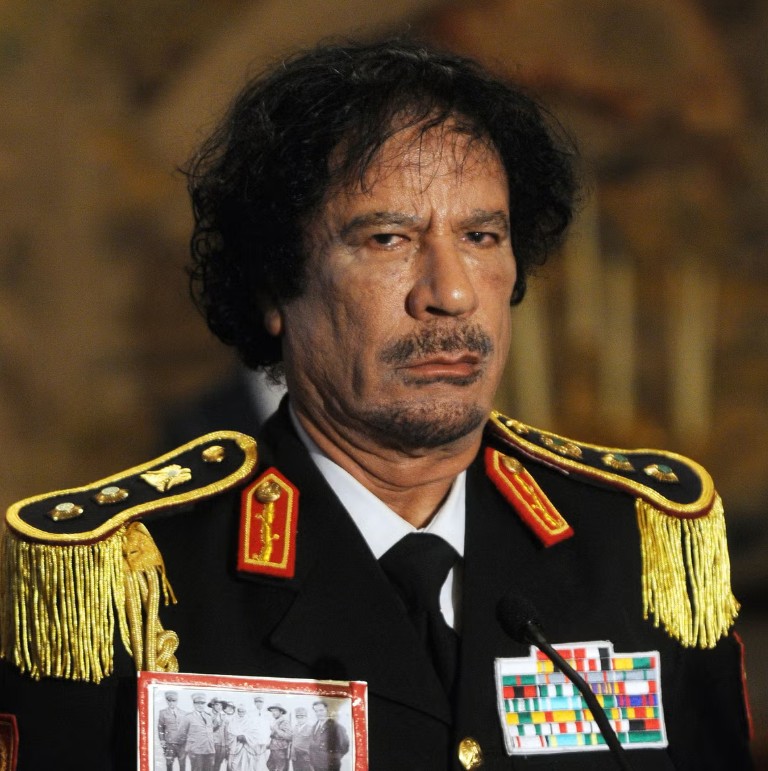
The Siege of Sirte
Sirte, once a sleepy fishing village, had been transformed by Gaddafi into a second capital lavish villas, government buildings, and conference centers stood as monuments to his ego. It was here, not far from his birthplace in Bou Hadi, that Gaddafi chose to make his last stand. As National Transitional Council (NTC) forces tightened their grip on the city in September 2011, loyalist fighters held out in a shrinking defensive pocket. District Two, on the city’s western edge, became the final battleground.
The defenders’ resilience puzzled rebel commanders. Every day brought mortar exchanges, small counter-attacks, and the eerie thrum of machine gun fire. At night, pro-Gaddafi forces launched probing raids, hoping to punch holes in the siege. Many believed Gaddafi had fled to the desert. Few imagined he was trapped in Sirte.
Radio Intercepts and Growing Suspicion
Among the rebel ranks was Osama Swehli, a bearded NTC fighter with fluent English shaped by years in west London. Swehli spent days intercepting loyalist radio traffic. Call signs gave away the presence of high-ranking figures: “1” for Mo’atissim Gaddafi, “3” for Mansour Dhao, and a mysterious “2,” believed to be intelligence chief Abdullah Senussi.
More intriguing was repeated mention of “the asset.” Swehli suspected it referred to someone extremely important perhaps even Gaddafi himself but few in the ranks believed the deposed dictator would remain in such a dangerous location.
Gaddafi on the Run
It was later confirmed that Gaddafi had fled Tripoli just before its fall in late August. While motorcades carrying his family to Algeria and Niger were tracked and reported, his own escape remained cloaked in secrecy. The route south toward Bani Walid was the only passage not yet captured by rebels. From there, his convoy zigzagged through the Libyan desert, avoiding rebel positions and NATO surveillance, before circling back to Sirte.
During the siege, Gaddafi and his entourage led by his son Mo’atissim moved frequently between apartments and villas, reportedly changing locations every four days. Their presence remained hidden, concealed by the chaos of urban warfare and the loyalty of local fighters.
The Final Breakout Attempt
On the morning of October 20, a large convoy of around 75 vehicles attempted a desperate breakout from Sirte’s besieged District Two. Unbeknownst to NATO or NTC fighters, Gaddafi was among them.
NATO air support spotted the convoy and launched a precision strike: a U.S. Predator drone and a French Rafale jet fired on the vehicles, destroying about a dozen and scattering the rest. As the convoy disintegrated, smaller groups fled on foot.
Among them was Gaddafi, accompanied by guards and close aides, including Abu Bakr Yunis Jabr and Mansour Dhao. According to Dhao, the plan had been to escape to Jarif, Gaddafi’s tribal home outside Sirte, but the route was blocked. During the retreat, Dhao was injured and lost consciousness, leaving him unaware of what happened next.
The Capture of Gaddafi
NTC fighters, following a trail of blood, discovered Gaddafi hiding in a roadside culvert a drainage pipe under a highway. What happened next has been reconstructed from a series of mobile phone videos, the most detailed shot by fighter Ali Algadi.
The footage shows Gaddafi, dazed and bleeding heavily from head and arm wounds, being dragged from the drain. Blood stains his tunic as fighters shout “Allahu Akbar” and fire weapons in the air. Some scream to keep him alive; others jeer and beat him. Conflicting reports suggest he begged for mercy, asking “What did I do to you?”
What is indisputable is that Gaddafi was captured alive. But soon after, further video clips showed him shirtless, unconscious, and then dead in the back of an ambulance.
A Controversial Death
The exact cause and circumstances of Gaddafi’s death remain murky. Some fighters claim he was shot in the stomach with a 9mm pistol. Medical examiners later suggested a fatal shot to the head. Others allege he was killed in crossfire, or executed on the spot. The truth may never be known.
His son Mo’atissim, captured separately, was also filmed alive wounded, smoking a cigarette and drinking water. Hours later, he too was pronounced dead, raising questions about possible summary executions. Human rights organizations including Amnesty International and the United Nations demanded investigations into the killings.
Aftermath in Misrata
By the following day, Gaddafi’s body had been transported to Misrata, where it was stored in a freezer used by restaurants. Libyans queued to see the corpse of the man who had ruled them with fear for generations. Some took photos; others spat. Most expressed a desire to see the past buried with him.
“There’s something in our hearts we want to get out,” said Abdullah al-Suweisi, a Misrata resident. “It is the injustice of 40 years. There is hatred inside. We want to see him.”
Sirte: A City of Ruins and Memories
As NTC fighters swept through the city, abandoned homes offered haunting reminders of Gaddafi’s cult of personality. Stylized portraits, copper wall hangings, and discarded mobile phones with photos of luxury limousines littered the villas. Sirte had become a fortress, then a graveyard for Gaddafi’s legacy.
Concrete walls, defensive compounds, and the massive Ouagadougou conference center had made the city a stronghold. But it also trapped Gaddafi in the end, cutting off any hope of escape.
Legacy and Unanswered Questions
Gaddafi’s fall brought a violent end to one of the longest dictatorships in modern history. But it also opened the door to a deeply uncertain future. Libya soon plunged into civil war, and a decade later remains fractured and unstable.
The unanswered questions surrounding Gaddafi’s final moments whether he was executed, whether justice was served remain a source of tension both within Libya and in the international community. Yet for many Libyans, his death marked the closure of a long, painful chapter.
Muammar Gaddafi’s final moments were the stuff of tragedy, irony, and symbolism. He died not in exile, nor in an impenetrable desert bunker, but in a culvert beneath the streets of the city he had tried to immortalize. His death was raw and chaotic, mirroring the violence that had defined much of his rule. For Libya, the end of Gaddafi offered hope, but also a stark reminder of how deeply power corrupts and how painfully freedom is won.
World News -Mikayla Raines Cause of Death and Mental Health Warrior
Cate Blanchett and A Portrait of Versatility
Brian Wilson Cause of Death and Beach Boys Legend Dies at 82
Actor Rick Hurst Death and Legacy at 79
Karmelo Anthony Case Video and Austin Metcalf Death
Quiero Agua Video Gore and the Rise of CJNG El Payaso
Ronnie McNutt Video and Social Media Responsibility