Lisbon Funicular Crash Video and Funicular Derailment
Lisbon awoke to grief and shock on Wednesday after one of its most iconic symbols of urban heritage, the Gloria funicular, derailed in the heart of the city. The tragic accident claimed at least 15 lives and left 18 others injured, five of them in critical condition. The incident occurred in one of Lisbon’s busiest tourist districts, where the historic yellow tram-like funicular carried passengers up the steep hillside between downtown Restauradores Square and the vibrant Bairro Alto neighborhood.
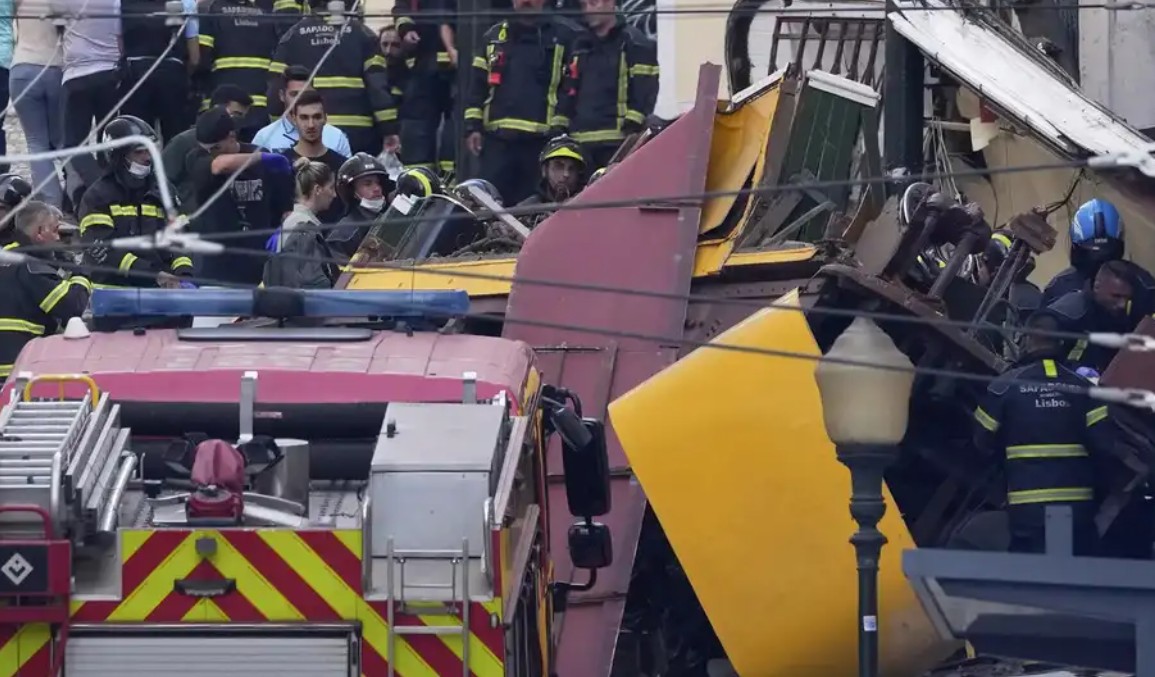
As news spread across Portugal and abroad, images of the overturned car and the frantic rescue efforts sent shockwaves through both local residents and the international community. The government quickly declared a day of national mourning, while the city’s mayor called it “a tragic, tragic day” for the capital.
The Accident and Video
The derailment unfolded in the late afternoon, at a time when the Gloria funicular was operating under heavy load from both residents and tourists. Witnesses reported hearing a loud metallic screech before the car careened off the rails on its ascent, overturning on the steep incline. The yellow car, beloved by visitors for its vintage charm and panoramic views of Lisbon’s hills, was left crumpled on its side.
Video of the accident that left everyone shocked and stunned
lisbon-funicular-crash-video-1.mp4
lisbon-funicular-crash-video-2.mp4
Emergency services rushed to the scene within minutes. Firefighters, medics, and police sealed off the area as they worked frantically to extract passengers trapped inside the wreckage. Video footage recorded by bystanders showed emergency workers carrying victims away on stretchers while sirens echoed through the narrow streets. The atmosphere was described by witnesses as chaotic, with injured passengers crying out for help and shocked onlookers attempting to provide first aid.
Casualties and Victims
Authorities confirmed that 15 people died in the crash, making it one of the deadliest transport accidents in Lisbon’s modern history. Eighteen others sustained injuries, ranging from broken bones to severe head trauma. Among them, five were listed in grave condition and rushed to nearby hospitals for emergency treatment.
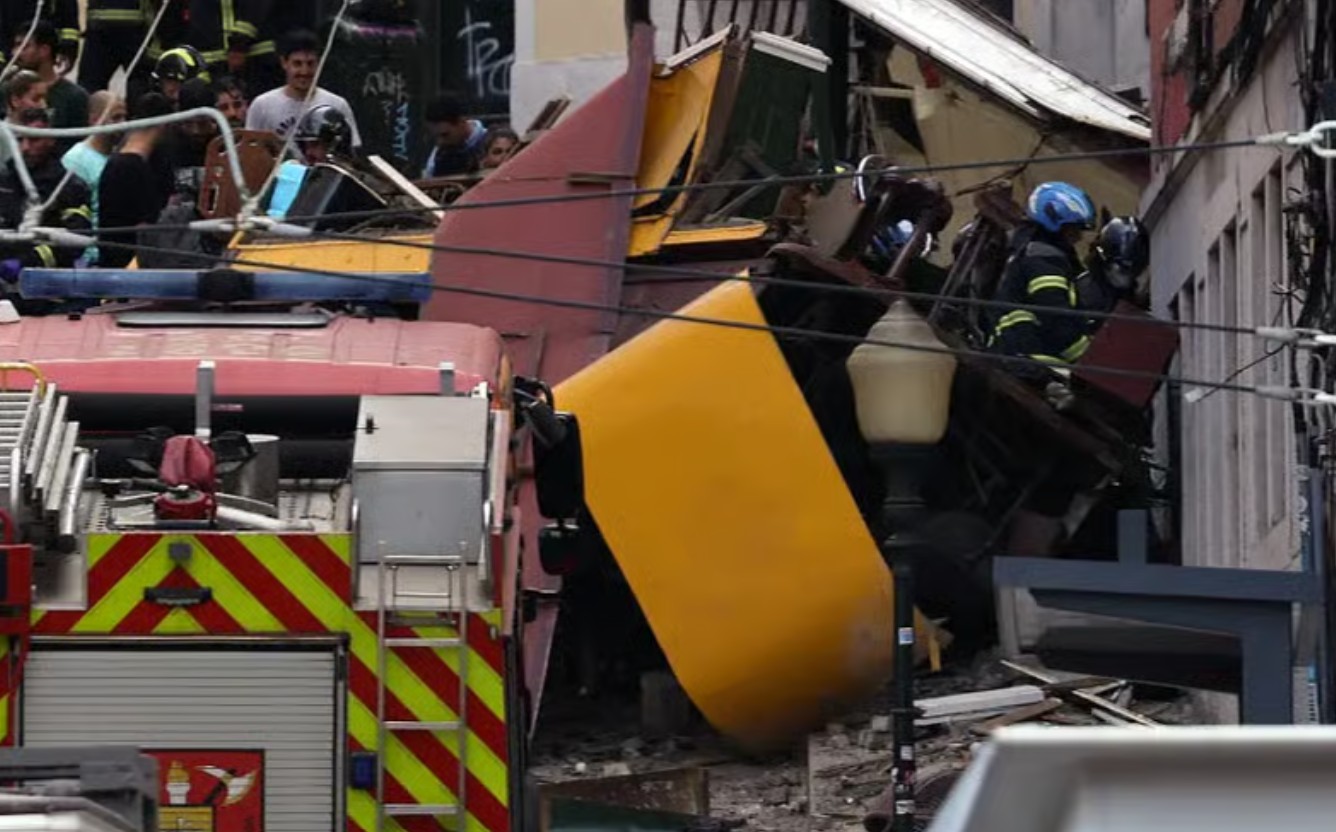
Officials did not immediately release the names or nationalities of the victims, citing the need to notify families. However, they confirmed that several foreign nationals were among the dead, reflecting the funicular’s status as a popular tourist attraction. The presence of children and families among the passengers added to the heartbreak, as Lisbon’s residents expressed collective grief for those who had come to enjoy their city and instead encountered tragedy.
Reactions from Authorities
Lisbon’s mayor, Carlos Moedas, visibly shaken as he addressed reporters at the scene, described the incident as one of the darkest days in the city’s history. “Lisbon is in mourning. It is a tragic, tragic incident,” he said, calling on the community to unite in support of the victims and their families.
President Marcelo Rebelo de Sousa echoed those sentiments in a statement issued from the presidential palace. He lamented the loss of life and emphasized the urgent need to determine the causes of the accident. “This tragedy demands answers,” he declared, urging investigators to act swiftly but thoroughly.
In response to the scale of the disaster, the Portuguese government declared a national day of mourning for Thursday. Flags across the country were lowered to half-mast, and moments of silence were observed in government buildings, schools, and public squares.
Meanwhile, the prosecutor general’s office confirmed that a formal investigation had been opened, as is customary in public transportation accidents. Police cordoned off the crash site, and forensic teams began their work of documenting the wreckage and gathering technical data.
The Gloria Funicular
The Gloria funicular has long been more than a transport link; it is a cherished piece of Lisbon’s cultural identity. Opened in 1885, the line has connected downtown Restauradores Square with Bairro Alto for well over a century. Its steep climb and distinctive yellow carriages made it a magnet for tourists seeking both convenience and nostalgia.
The funicular is operated by Carris, Lisbon’s municipal transport company, and is one of three historic funiculars in the city. Each year, it transports roughly 3 million passengers, many of them international visitors who regard it as a must-see attraction. For locals, it remains a practical means of traversing the city’s steep hills.
Because of its role as both a heritage symbol and a functioning public utility, the Gloria funicular occupies a special place in Lisbon’s identity. The sight of it overturned in the middle of the street struck many as almost surreal, a stark reminder that even beloved icons are not immune to tragedy.
Technical and Operational Details
The Gloria funicular operates on a system of two cars attached to opposite ends of a haulage cable. Each car is capable of carrying around 40 passengers, and traction is provided by electric motors. When one car ascends, the other descends simultaneously, balancing the system.
Carris, in a statement issued after the accident, insisted that all maintenance protocols had been properly observed. The company noted that the funicular underwent daily inspections, as well as weekly and monthly maintenance routines. “All safety checks were up to date,” the statement said.
Yet questions quickly arose about what could have caused such a catastrophic failure. Video captured by bystanders and aired by CNN Portugal showed the second car jolting violently at the bottom of the line when the first derailed, with several passengers leaping out of its windows in panic. Experts suggested that a cable or braking malfunction may have been involved, though no official cause has been confirmed.
Eyewitness Accounts and Media Coverage
Eyewitnesses described scenes of horror and disbelief. One tourist from Spain told local media that the funicular “suddenly shook, and people screamed before it tipped over.” Another Lisbon resident said she saw “passengers jumping from the windows as it started to slide.”
Images shared on social media showed crowds gathered around the wreck, many attempting to pull injured passengers to safety. Television stations broadcast live coverage of the rescue operations, with viewers across Portugal glued to their screens. The accident dominated international headlines as well, given the funicular’s global recognition as a Lisbon landmark.
Tourism Impact
The tragedy struck at the heart of Lisbon’s booming tourism industry. Over the past decade, Portugal has experienced record numbers of visitors, with Lisbon as its crown jewel. The Gloria funicular, in particular, has been heavily marketed as a symbol of the city’s charm and authenticity.
Britain is Portugal’s largest source of tourism, followed closely by Germany, Spain, and the United States. The UK Foreign, Commonwealth and Development Office confirmed it was in contact with Portuguese authorities and prepared to provide consular assistance if British nationals were affected. The US State Department also monitored the situation, though it did not issue an immediate statement.
While the long-term impact on tourism remains to be seen, analysts suggested that confidence in the safety of Lisbon’s historic transport systems could be shaken. For a city that prides itself on blending history with modernity, balancing heritage preservation with passenger safety has become an urgent priority.
Ongoing Investigation
As rescue efforts gave way to recovery and reflection, the focus shifted to investigation. Police forensic units and engineers examined the damaged car, cable systems, and tracks. Authorities pledged to leave no stone unturned in identifying the cause of the derailment.
Carris maintained that all safety procedures had been correctly implemented, raising the possibility of an unforeseen mechanical defect or human error. Officials from the prosecutor general’s office emphasized that accountability would be pursued if negligence was discovered.
Until the results are known, speculation continues. For many residents, however, the priority remains honoring the victims and supporting their families.
National and International Response
Portugal as a nation has rallied in solidarity. Vigils were held in Lisbon’s central squares, with candles and flowers placed at makeshift memorials near the accident site. Messages of condolence poured in from abroad, including from European Union leaders and neighboring Spain.
The accident also reignited international discussions about the challenges of maintaining historic transport infrastructure. Across Europe, cities with heritage railways and trams face similar dilemmas: how to preserve cultural icons while ensuring 21st-century safety standards.
The derailment of Lisbon’s Gloria funicular has plunged Portugal into mourning and left an indelible scar on the capital’s historic heart. What was once a joyful ride for millions of visitors became a scene of devastation, symbolizing both the fragility of human life and the risks of balancing heritage with modern demands.
As investigators search for answers and families grieve their losses, Lisbon faces a reckoning with its past and its future. The Gloria funicular, a beloved emblem of the city since 1885, will forever be linked to this tragedy. Yet in the collective sorrow, there is also resilience. The city, and the nation, will remember the lives lost, and ensure that safety, accountability, and compassion guide the path forward.
World News -Louisa Jespersen and Maren Ueland Video and Global Impact
Russian Lathe Accident Video and Viewer Reactions
Miss Pacman Video and Tragic of Alejandra Ico Chub
Ikbal Uzuner Video Incident and A Story of Violence
Robin Westman Youtube Video and Minneapolis Shooting School
Nermin Sulejmanović Video and Instagram Livestream Murders
Funky Town Gore Video and Ethical Debate